How To Turn Off Screen Saver Windows 10
Download artbeats photos, images and assets from Adobe Stock. Artbeats hd rapidshare downloads. Find professional Artbeats videos and B-roll stock footage available for license in film, television, advertising and corporate uses. Getty Images offers exclusive rights-ready and premium royalty-free analog, HD, and 4K video that you won't find anywhere else in the world. Artbeats Software, Inc. Myrtle Road, Myrtle Creek 97457. 541-391-0301.
@DeeJayh I think you can just find the instance of wscript.exe in Task Manager and kill it. There usually aren't a lot of instances of that executable running. You could probably make an automated solution for termination or by putting code in the Do While section that watches for an external fact. Like have the script create a file on startup, then check that the file exists in While. That way you could just delete the file to make the script terminate.
To remove Windows 10’s lock screen ads, click on your Start menu, and open up the Settings app: From here, choose the Personalization setting, and then navigate to the Lock Screen tab. Once this is open, find the field that reads “Windows Spotlight”, and click on the box. You can switch this to display either a “Picture” or a.
(I never quit the thing, though, so I just run the script and very rarely kill it with Task Manager).–Feb 4 '17 at 20:28. Yet another option is freeware program. It is free for commercial use as well.
From the program's homepage:If you have problems with your PC locking or going to sleep, caffeine will keep it awake. It works by simulating a key-press once every 59 seconds, so your machine thinks you're still working at the keyboard, so won't lock the screen or activate the screensaver.Caffeine works by simulating an F15 key up event every 59 seconds. Of all the key presses available, F15 is probably the least intrusive (I've never seen a PC keyboard with that key!), and least likely to interfere with your work.This off-the-shelf solution also allows you to control when to enable it and disable it:Double-clicking the program icon empties the coffee pot, which is what the icon represents, and temporarily disables the program. Double-clicking it again refills the pot, and will keep your machine awake. You can create an script to either continually press an unused key (e.g. Make it toggle the num lock, scroll lock), sleep for a minute or so, and repeat.
Screen saver is a nice way to protect your computer from prying eyes when you walk away without locking it. After a short time of inactivity, screen saver will automatically lock the screen and apply password protection. But sometimes screen saver will bother you while playing movie. In this tutorial we’ll show you 2 ways to turn on or off screen saver in Windows 10 / 8 /7.
Method 1: Turn On / Off Screen Saver from Screen Saver Settings Dialog
- Right-click the empty space on your desktop and select Personalize.
- It now opens up the Personalization settings. Click on Lock screen in the left pane, then click the Screen saver settings link in the right pane.
If you’re running Windows 7, simply click on the Screen SaverRivet new 360 media sharing for mac. link at the bottom of the window.
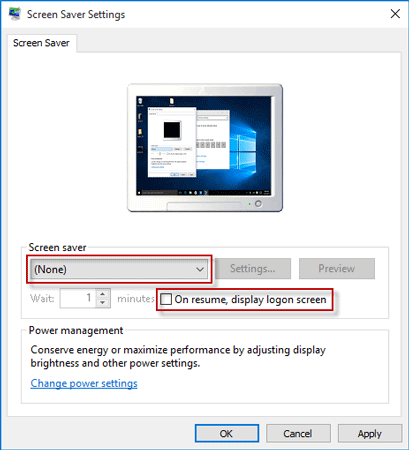
- Once Screen Saver Settings dialog is launched, you can customize the screensaver and change the idle time before the screen saver is activated. If you want to turn off screen saver, just set the screen saver as None and Uncheck the box to On resume, display logon screen.
- Click Apply and then OK.
Method 2: Turn On / Off Screen Saver Using Group Policy
- Press Windows key + R and type gpedit.msc and hit Enter. This will open the Local Group Policy Editor.
- Navigate to User Configuration > Administrative Templates > Control Panel > Personalization. Double-click on the policy labeled “Enable screen saver“.
- Set it to Disabled if you want to turn off screen saver. After disabling, all the screen saver settings options will be greyed out. If you want to turn on screen saver later, you need to set that option to Enabled.
- Click OK and reboot your computer for the changes to take effect.